
E
Equity Medium & Long Term
A research-driven equity advisory service focused on medium to long-term wealth ...
MONTHLY ₹ 3,000/-
QUARTERLY ₹ 7,000/-
YEARLY ₹ 25,000/-

Research-driven equity advisory focused on long-term wealth creation. We identify high-quality listed companies with strong fundamentals, sustainable competitive advantages, and long-term growth visibility.

A research-driven equity advisory service focused on medium to long-term wealth ...
Basket Objective
The Dividend Shield Basket aims to provide stable equity participation by investing in companies with a proven dividend-paying track record, strong balance sheets, and sustainable cash-flow generation.
The focus is on businesses that return capital to shareholders through disciplined dividend policies, while maintaining financial strength and long-term business durability.
Core Investment Philosophy
This basket is built on the belief that cash-flow discipline and balance sheet strength are critical for long-term equity stability.
The portfolio prioritises companies that demonstrate:
Consistent dividend pay-outs backed by operating cash flows
Strong capital allocation discipline
Healthy return ratios and conservative leverage
Resilient business models with earnings visibility
Ability to withstand economic slowdowns without compromising financial health
Such businesses tend to exhibit lower drawdowns and better risk-adjusted outcomes over full market cycles.
Nature of Businesses in the Basket
The companies included in this basket typically:
Generate steady and predictable operating cash flows
Operate in essential, regulated, or mature segments with demand visibility
Require limited incremental capital to sustain operations
Exhibit prudent financial management and shareholder-friendly policies
Have business models that remain relevant across economic cycles
These characteristics help support dividend sustainability and balance-sheet resilience over time.
Risk & Return Framework
The Dividend Shield basket is designed with a defensive risk profile:
Lower business risk compared to high-growth or momentum-driven portfolios
Reduced earnings volatility due to stable operating models
Limited dependence on aggressive leverage or capital raising
Exposure to regulatory or sector-specific risks, which are actively monitored
While short-term price fluctuations are inherent to equity markets, the underlying focus remains on business stability and financial strength.
Expected Outcome
Over a full market cycle, the Dividend Shield basket seeks to:
Enhance portfolio stability within an equity allocation
Reduce downside impact during market corrections
Benefit from steady compounding supported by dividend discipline
Deliver more predictable equity outcomes compared to high-beta strategies
The basket is suitable for investors with a medium- to long-term horizon who value quality, discipline, and capital preservation alongside equity participation.
Role in an Investor’s Portfolio
This basket is intended to act as:
A defensive or low-volatility equity allocation
A stabilising layer alongside growth, thematic, or high-conviction baskets
A quality-focused component within diversified long-term portfolios
It complements growth-oriented strategies rather than competing with them.
Disclaimer:
Investments in equity markets are subject to market risks. Dividend payments are not assured and depend on company performance and management decisions. Past dividend history does not guarantee future payouts.
Investors are advised to assess suitability and risk factors before investing.
Basket Objective
The Monopoly Masters Basket aims to create long-term wealth by investing in companies that enjoy dominant market positions, high entry barriers, and strong earnings visibility.
The focus is on businesses that operate at the core of India’s economic, financial, infrastructure, and strategic ecosystem, where competition is structurally limited.
🧠 Core Investment Philosophy
This basket is built on the principle that business quality and competitive advantage matter more than short-term growth.
The portfolio prioritizes companies that benefit from:
Regulatory or policy protection
Network effects and high switching costs
Capital-intensive infrastructure that is difficult to replicate
Strategic national importance
Ability to generate stable and predictable cash flows
Such businesses tend to compound steadily over long periods, with lower probability of permanent capital loss.
🧱 Nature of Businesses in the Basket
The companies included in this basket typically:
Hold dominant or near-monopoly positions in their respective segments
Form part of the essential backbone of the economy
Are difficult to disrupt due to regulation, scale, or system-level integration
Benefit from long product life cycles and recurring demand
These characteristics create structural moats that help sustain profitability across economic cycles.
📊 Risk & Return Framework
The basket is designed with a balanced risk–return profile:
Lower business risk compared to high-beta thematic portfolios
Reduced sensitivity to competitive disruption
High earnings visibility and cash flow stability
Moderate exposure to policy or regulatory changes, which is actively monitored
While short-term price volatility may occur, the underlying business models remain resilient.
🎯 Expected Outcome
Over a full market cycle, the Monopoly Masters basket seeks to:
Deliver consistent compounding returns rather than sharp cyclical spikes
Protect capital during market downturns
Benefit from India’s long-term structural growth and formalization
The basket is suitable for investors with a long-term horizon (10–15+ years) who value predictability, durability, and quality.
🧩 Role in an Investor’s Portfolio
This basket is intended to act as:
A core portfolio allocation
A stabilizing anchor alongside higher-risk growth or thematic baskets
A foundation for long-term or generational wealth creation
It complements, rather than replaces, high-growth or tactical investment strategies.
🔄 Portfolio Management Approach
Periodic rebalancing based on business quality, valuations, and structural relevance
Avoidance of purely cyclical or short-term opportunity-driven businesses
Focus on maintaining monopoly characteristics and economic moats over time
🏁 Final Thought
The Monopoly Masters basket is built on the idea that the most enduring wealth is created by owning businesses that are difficult to replace. By focusing on dominant, high-barrier enterprises that form the backbone of the economy, the basket seeks to provide stable and sustainable long-term compounding.
Advantage AI — Modelfolio Rationale
The Indian technology sector is undergoing a fundamental transformation driven by Artificial Intelligence. While the broader market often reacts to this shift with uncertainty, we believe it represents one of the most significant structural opportunities in India's technology landscape.
Our thesis is straightforward. Artificial Intelligence is not the end of the IT sector. It is the next evolution of it. The companies that actively embrace AI, integrate it into their service delivery, win AI-led deals, and build proprietary AI platforms will emerge as the leaders of the next technology cycle. This modelfolio is built to capture that leadership.
Our Approach
We do not invest in the AI story. We invest in companies that are living it through actual revenue contribution, measurable client outcomes, and real business growth. Every stock in this modelfolio has been selected through a strict three-filter process. First, demonstrated AI adoption validated through deal wins, live platform deployments, and AI-led revenue contribution. Second, proven financial growth with consistent revenue and earnings improvement and healthy or improving margins. Third, a technically sound chart structure ensuring disciplined entry and risk management at all times.
Portfolio Construction
The modelfolio follows a disciplined equal-weight approach with no single stock exceeding 11% allocation. This ensures no single-stock risk can materially impact overall portfolio performance. The portfolio is periodically reviewed and rebalanced based on evolving business fundamentals and market conditions.
Target Investor
This modelfolio is suited for investors with a minimum investment horizon of 12 to 18 months, a moderate-to-high risk appetite, and a conviction in India's long-term AI and technology story. It is a high-conviction, curated portfolio built for investors who believe in backing quality businesses at the right price.
Risk Acknowledgement
Investments in the securities market are subject to market risks. The technology sector is sensitive to global macroeconomic conditions, currency movements, and enterprise technology spending cycles. Past performance of any sector or stock is not indicative of future results. Investors are advised to read all related documents carefully and assess their own risk profile before investing.
Quant Edge Flexicap is built on a simple belief : The markets reward measurable strength over opinions.
The strategy follows a rules-based, data-driven framework that selects stocks based on a combination of:
Price momentum
Earnings strength and revisions
Return ratios (ROE/ROCE)
Balance sheet quality
Relative performance vs benchmark
By reviewing and rebalancing monthly, the model aims to:
Capture emerging leadership early
Exit weakening trends without emotional bias
Rotate capital toward stronger sectors dynamically
As a flexicap strategy, it has the flexibility to move across large, mid, and small-cap segments depending on where the data indicates strength.
The objective is not to predict markets, but to systematically align with prevailing trends while maintaining disciplined risk controls.
Risk Profiling – Quant Edge Flexicap
Risk Category: High
Volatility Expectation: Above market average
Investment Horizon: Minimum 3 years
Drawdown Tolerance Required: 20–30%
Suitable For:
Investors with aggressive risk appetite
Those comfortable with short-term volatility
Investors who understand momentum-driven strategies
Individuals seeking alpha over benchmark returns
Age group typically below 45 (not mandatory, but behaviourally aligned)
Investors already diversified across asset classes
Not Suitable For:
Capital protection-focused investors
Investors dependent on portfolio for regular income
Those uncomfortable with monthly portfolio changes
Investors expecting smooth, linear returns
Behavioural Expectation
This strategy may:
Underperform during sideways markets
Correct sharply during broad market drawdowns
Require discipline to stay invested during volatility
🔍 Portfolio Overview
The Viksit Bharat ETF Portfolio is a growth-oriented, ETF-only model portfolio designed to help investors participate in India’s long-term economic growth through a structured, disciplined, and transparent investment approach.
The portfolio avoids individual stock selection and instead uses carefully chosen ETFs to capture growth opportunities, evolving market leadership, and factor-based performance trends. It aims to balance growth potential and risk management through diversification and periodic rebalancing.
🎯 Investment Objective
The primary objectives of this portfolio are to:
Achieve long-term capital appreciation
Participate in India’s structural growth story
Capture evolving market leadership through rule-based strategies
Reduce reliance on discretionary stock-picking decisions
Offer a disciplined alternative to traditional active equity investing
This portfolio is designed for investors with a long-term investment horizon who prefer a systematic, rules-based ETF approach.
🧱 Portfolio Construction Philosophy
The portfolio is constructed using exchange-traded funds (ETFs) that provide diversified exposure across different segments of the Indian equity market, along with select non-equity allocations for risk management.
The construction follows three key principles:
1️⃣ India Growth Participation
The portfolio provides exposure to India’s growth through a combination of:
Broad market participation
Emerging and high-growth segments
Select factor-based and trend-following strategies
This allows the portfolio to adapt as leadership within the Indian market changes over time.
2️⃣ Smart Allocation & Factor Orientation
Rather than relying only on traditional indices, the portfolio incorporates rules-based strategies that seek to benefit from:
Market momentum
Relative strength
Evolving growth trends
This approach aims to improve risk-adjusted returns across market cycles.
3️⃣ Risk Management through Diversification
Diversification is built into the portfolio to help manage volatility by:
Spreading exposure across multiple market segments
Avoiding over-concentration in any single strategy
Including stabilising assets where appropriate
This helps smooth returns during different market phases.
🔄 Asset Allocation & Rebalancing
The portfolio follows a growth-oriented asset allocation, with equities forming the core component.
Asset allocation is periodically reviewed
Rebalancing is done to realign weights with the intended strategy
Allocation changes are handled systematically, not emotionally
This disciplined process helps:
Control portfolio risk
Prevent excessive concentration
Systematically book profits and redeploy capital
Rebalancing plays a crucial role in the portfolio’s long-term return potential.
💰 Investment & Capital Deployment Strategy
Minimum investment: Flexible (ETF-based investing)
Recommended approach: Phased investing (SIP mode preferred)
Investors are encouraged to invest gradually and continue adding capital over time, especially during market volatility.
This approach helps:
Reduce market timing risk
Build exposure across different valuation levels
Improve long-term investment outcomes
The portfolio is suitable for investors who prefer discipline over prediction.
⚠️ Risk Profile & Suitability
Key Risks:
Equity market volatility
Interim drawdowns during unfavourable market conditions
Performance variability across market cycles
Suitable for:
✔ Long-term investors
✔ Investors comfortable with equity market volatility
✔ Investors seeking a rules-based ETF strategy
✔ Investors aligned with India’s long-term growth outlook
Not suitable for:
❌ Short-term traders
❌ Investors seeking guaranteed or capital-protected returns
❌ Investors uncomfortable with temporary drawdowns
💳 Fee Structure
Fee is not linked to investment amount
As invested capital grows, the effective cost reduces over time
Applicable taxes (GST) charged as per prevailing regulations
This structure ensures transparency and avoids conflicts linked to asset size.
📌 Important Disclosure
This portfolio represents a model portfolio recommendation using ETFs.
Past performance, if any, is not indicative of future results.
Investors should evaluate suitability based on their financial goals, risk appetite, and investment horizon before investing.
🎯 Purpose of the Basket
This basket is designed to capture structural, long-duration growth themes that are reshaping India’s economy over the next decade, rather than short-term cyclical or valuation-driven opportunities.
The focus is on new-economy enablers — businesses that sit at the foundation of future growth, including:
Electrification and energy transition
Automation, digital engineering and intelligence-led manufacturing
Power electronics, grid modernisation and infrastructure upgrades
High-value electronics and advanced manufacturing ecosystems
The basket aims to participate in where capital expenditure, policy support and technology adoption are structurally aligned, not where past returns have already been realised.
🧠 Core Investment Philosophy
The basket is built on three guiding principles:
1️⃣ Structural Growth over Cyclical Growth
The selected themes are driven by multi-year capex cycles, policy backing, and irreversible technological shifts, rather than commodity prices, consumption cycles or short-term demand fluctuations.
This reduces reliance on timing the economic cycle and increases earnings visibility over a longer horizon.
2️⃣ Earnings-Led Alpha, Not Valuation Hope
The strategy deliberately avoids relying on:
One-time turnarounds
Binary execution stories
Extreme valuation rerating without earnings support
Instead, alpha is expected to come from:
Revenue compounding
Operating leverage
Margin stability or gradual expansion
Balance-sheet strength and execution consistency
This ensures returns are driven by fundamental business performance, not narrative momentum.
3️⃣ Positioning Across the Value Chain
Rather than concentrating risk in a single segment, the basket spans:
Design & engineering
Manufacturing & integration
Power & infrastructure enablement
Services embedded in long-term capex themes
This diversification improves risk-adjusted returns while maintaining exposure to the same underlying structural trends.
📈 Alpha Generation Framework
The basket is structured to generate alpha through three channels:
🔹 1. Structural Earnings Growth
As electrification, automation, renewables and digital infrastructure scale, earnings growth is expected to be above GDP growth and above broad market averages.
🔹 2. Operating Leverage in Capex Upcycle
Many businesses in this theme have high fixed-cost bases. As volumes scale, incremental revenue flows disproportionately to profits, driving faster EPS growth than revenue growth.
🔹 3. Selective Re-rating from Execution
Valuation expansion is treated as optional upside, not the core thesis. Any re-rating is expected to follow:
Delivery on growth plans
Margin stability
Improved visibility and scale
This makes returns more resilient across market conditions.
📊 Beta Characteristics & Market Behaviour
Beta: Moderately high (above index average), reflecting exposure to growth and capex themes
Volatility: Higher than defensive portfolios, but lower than speculative or micro-cap thematic baskets
Market sensitivity: Performs best in periods of:
Economic expansion
Capex revival
Policy-driven infrastructure growth
The basket is not designed to outperform in sharp market sell-offs, but to outperform across a full market cycle.
⚠️ Key Risks to the Strategy
1️⃣ Execution & Project Timelines
Delays in capex execution, infrastructure readiness or order inflows can impact near-term performance.
2️⃣ Valuation Sensitivity
While the basket avoids extreme valuations, growth stocks remain sensitive to:
Interest rate changes
Liquidity tightening
Risk-off market phases
3️⃣ Cyclicality within Capex Themes
Even structural themes experience phases of consolidation. Short-term underperformance may occur despite long-term thesis remaining intact.
4️⃣ Policy & Regulatory Risk
Changes in government incentives, tariffs or implementation speed can affect growth trajectories.
🛡️ Risk Management Philosophy
Risk is managed, not eliminated, through:
Diversification across sub-themes
Avoidance of binary, single-event outcomes
Periodic review and rebalancing
Preference for earnings visibility over speculative growth
The basket intentionally avoids concentration in:
Highly leveraged balance sheets
Unproven technologies without commercial traction
Stocks where future success is already fully priced in
⏳ Investment Horizon & Suitability
Recommended horizon: Medium to long term (3–5 years)
Suitable for investors who:
Seek higher-than-market returns
Are comfortable with interim volatility
Prefer theme-based, future-oriented investing
Want limited monitoring and disciplined rebalancing
Not suitable for investors seeking:
Short-term trading gains
Capital protection in sharp corrections
High dividend or defensive income strategies
🧩 Final Thought
This basket is built to own the future, not chase the past.
It is designed to participate in India’s transformation into a technology-driven, electrified, manufacturing-led economy, where sustainable alpha is created through execution, scale and earnings growth, rather than speculation.
🌦️ All-Weather Growth Folio
📌 Portfolio Overview
The All-Weather Investing Basket is a stocks-only, diversified core portfolio designed to deliver consistent long-term compounding across market cycles.
Instead of relying on market timing or short-term themes, the portfolio combines different types of businesses—financials, consumption, infrastructure, healthcare, energy, technology, and market infrastructure—so performance does not depend on any single economic outcome.
The objective is to balance growth and stability, reduce portfolio volatility, and help investors remain invested through varying market conditions.
🎯 Investment Objective
Generate low-to-mid teen returns over a full market cycle
Reduce drawdowns compared to concentrated or thematic portfolios
Act as a core long-term equity allocation
Deliver smoother compounding through disciplined diversification
🧠 Core Investment Philosophy
The portfolio is built on the following principles:
1️⃣ Diversification by Business Role
Rather than diversifying only by sector, the portfolio diversifies by economic role, combining businesses that benefit from:
Credit and financial activity
Consumer demand
Infrastructure and capital expenditure
Technology adoption
Healthcare services
Energy and inflation-linked trends
Capital market participation
This structure allows different parts of the portfolio to perform during different phases of the economic cycle.
2️⃣ Preference for Cash-Generating, Scalable Businesses
The portfolio focuses on businesses that demonstrate:
Strong cash-flow generation
Sustainable return on capital
Balance sheet strength
Long-term structural demand
This helps reduce reliance on speculative or binary outcomes.
3️⃣ Balance Between Growth and Stability
Growth-oriented businesses are complemented with:
Defensive and non-discretionary segments
Businesses with relatively predictable earnings
Companies with pricing power or essential services
This balance helps smooth volatility without compromising long-term growth.
4️⃣ Long-Term, Process-Driven Approach
The strategy follows a disciplined investment process that emphasises:
Long holding periods
Periodic review and rebalancing
Avoidance of frequent churn
Process over short-term market prediction
🧱 Portfolio Construction Logic
The portfolio combines:
Financial backbone businesses that provide stability and compounding
Consumption-linked businesses that benefit from economic growth
Infrastructure and industrial businesses linked to long-term capital expenditure
Technology and services businesses providing innovation-led growth
Healthcare businesses offering defensive earnings stability
Energy-linked businesses acting as an inflation and commodity cycle hedge
Market infrastructure businesses benefiting from rising participation in capital markets
Together, these elements create a portfolio designed to remain resilient across different market environments.
📈 Expected Return & Risk Profile
Recommended holding period: 3–5 years or longer
Expected long-term outcome (not assured): Low-to-mid teen CAGR over a full market cycle
Volatility: Lower than concentrated or thematic equity portfolios
Drawdowns: Expected during market corrections, but moderated through diversification
👤 Suitable For
Long-term investors seeking a core equity portfolio
Investors who prefer stocks-only investing without ETFs
Investors comfortable with interim market volatility
Individuals looking for disciplined, process-driven investing
⚠️ Risk Disclosure
Equity investments are subject to market risks.
Returns are not guaranteed and may vary based on market conditions.
This portfolio is not suitable for short-term trading or capital protection objectives.
Overview
The Defense Dynasty Portfolio is a thematic equity model portfolio designed to capture India’s long-term structural transformation in defence manufacturing, aerospace, electronics, and strategic systems.
The portfolio focuses on companies that operate in mission-critical segments of the defence value chain, including weapons systems, avionics, radars, propulsion, electronic warfare, and precision engineering.
This is a high-conviction, long-term growth portfolio, aimed at investors seeking exposure to one of India’s most strategically important and policy-backed sectors.
Investment Objective
To benefit from India’s multi-decade defence indigenisation and export opportunity
To participate in sustained government capex and order-book driven growth
To build a concentrated yet diversified defence ecosystem portfolio
To generate long-term capital appreciation through structural earnings growth
Investment Philosophy
The Defense Dynasty Portfolio is built on three core principles:
1. Structural Growth Backed by Policy & Geopolitics
India’s defence sector is undergoing a once-in-a-generation transformation, driven by:
Indigenisation mandates
Import substitution
Rising defence budgets
Export opportunities
Geopolitical realignments
Unlike cyclical themes, defence spending is strategic, long-term, and non-discretionary, making this a structural growth opportunity rather than a short-term trade.
2. Full-Stack Defence Ecosystem Exposure
Rather than focusing on a single company or PSU, the portfolio is constructed to capture multiple layers of the defence value chain, including:
Defence electronics & avionics
Missiles, radars, and weapon systems
Aerospace & shipbuilding
Precision engineering & subsystems
Niche private-sector defence specialists
This approach reduces single-company execution risk while preserving thematic purity.
3. Concentration with Risk Awareness
The portfolio is intentionally concentrated to reflect high conviction, but:
No single stock dominates overall risk
Exposure is spread across PSUs and private players
Order-book visibility and execution capability are prioritised
This balances return potential with survivability across cycles.
Portfolio Construction Rationale
The portfolio combines:
Established defence PSUs with scale, credibility, and long order visibility
High-growth private companies with technology leadership and niche dominance
Emerging players benefiting from outsourcing and indigenisation
Key characteristics of the portfolio:
Strong aggregate order book visibility
Long project lifecycles
High entry barriers
Limited foreign competition
Increasing operating leverage as execution scales
Asset Allocation & Portfolio Management Approach
This is a single-theme equity portfolio, not a diversified multi-asset strategy.
Portfolio management focuses on:
Monitoring order inflows and execution milestones
Tracking policy changes, defence budgets, and export approvals
Periodic rebalancing to control concentration risk
Pruning positions if business fundamentals deteriorate
Rebalancing is event- and fundamentals-driven, not price-driven.
Investment & Deployment Strategy
Minimum investment to start: ₹60,000
Recommended approach: Phased investing
Given the volatility inherent in thematic portfolios, investors are encouraged to:
Start with an initial allocation
Add capital during market corrections or consolidation phases
Build exposure gradually rather than deploying all capital at once
In practice, long-term investors may deploy capital over multiple phases, which helps manage timing risk in a high-beta sector.
Return Expectations (Not Assured)
Recommended holding period: Minimum 3–5 years
Expected outcome: Returns linked to sector execution and order conversion cycles
Defence stocks can experience:
Periods of sharp rallies during order announcements
Phases of consolidation during execution lulls
Investors should expect interim volatility, but long-term outcomes are driven by earnings growth and order execution, not short-term price movements.
⚠️ Risk Profile & Suitability
Key Risks:
Project execution delays
Budgetary or policy changes
Valuation cycles in thematic stocks
Higher short-term volatility compared to diversified portfolios
Suitable for:
✔ Long-term investors with high risk appetite
✔ Investors seeking thematic exposure to defence & aerospace
✔ Investors comfortable with sector concentration
✔ Those who understand order-book driven businesses
Not suitable for:
Short-term traders
Low-risk or capital protection investors
Investors uncomfortable with drawdowns
Fee Structure
The Defense Dynasty Portfolio follows a flat subscription fee model, independent of investment size.
This structure ensures:
Transparency
No conflict of interest linked to portfolio size
Alignment with long-term investor outcomes
Applicable taxes are charged as per prevailing regulations.
Important Disclosure
This portfolio represents a thematic model portfolio recommendation.
Past performance, if any, is not indicative of future results.
Thematic portfolios carry higher risk and should form only a portion of an investor’s overall asset allocation.
Investors must assess suitability based on their financial goals, risk appetite, and investment horizon before investing.
Summary
The Defense Dynasty Portfolio is designed for investors who want:
Exposure to India’s strategic defence transformation
A focused, high-conviction thematic portfolio
Participation in long-term policy-backed growth
The potential for outsized returns with higher volatility
This portfolio is not about short-term momentum, but about owning India’s defence champions through a multi-year growth cycle.
Investment Rationale – Building Wealth by Building India
India’s journey towards becoming a developed economy by 2047 is a multi-decade structural transformation. This transformation will be driven by sustained investment in infrastructure, energy security, financial deepening, manufacturing scale, digital connectivity, healthcare expansion, and strategic self-reliance.
The Viksit Bharat @ 2047 model folio is designed to compound investor wealth alongside this national transformation, by allocating capital to businesses that form the core operating backbone of India’s economy.
This portfolio is not designed to chase short-term themes or market cycles.
It is designed to own India’s structural growth engines.
🧠 Core Investment Philosophy
The portfolio is built on one guiding principle:
We invest only in businesses without which India’s long-term development would be materially impaired.
Every holding must pass a strict test of structural inevitability, not just growth potential.
This approach ensures:
Low churn and long holding periods
Alignment with long-term GDP and productivity growth
Ability to compound across economic, political, and market cycles
🧱 Pillars of a Developed India & Portfolio Alignment
🏗 Physical Infrastructure
A developed economy requires extensive physical infrastructure—transport networks, industrial assets, logistics systems, and urban development.
The portfolio allocates to companies that execute, operate, or control critical infrastructure, ensuring participation in long-duration capital expenditure cycles with visible demand.
⚡ Energy & Power Security
Reliable and scalable energy is a non-negotiable requirement for economic growth.
Exposure is taken across businesses that:
Ensure energy availability today
Enable the transition towards cleaner and more efficient power systems
These assets benefit from both stability and long-term structural transition.
🏦 Financial Rails
Credit availability and capital formation are central to economic development.
The portfolio includes institutions that:
Channel savings into productive investment
Support households, businesses, and national priorities
Benefit from rising financialisation and credit penetration
As India’s credit-to-GDP ratio increases, these businesses are positioned to grow faster than the broader economy.
📡 Digital Infrastructure
In a modern economy, digital connectivity is as critical as physical infrastructure.
The portfolio captures exposure to digital networks that enable:
Payments and financial services
Government platforms
Enterprise productivity
Education, healthcare, and commerce
These digital rails scale directly with economic activity and productivity.
🏭 Manufacturing & Mobility
Manufacturing capability and mobility infrastructure are essential for employment creation, exports, and domestic demand.
The portfolio allocates to businesses that support:
Industrial growth
Rural and urban mobility
Freight movement and logistics efficiency
This ensures participation in India’s push towards industrialisation and supply-chain strengthening.
🧱 Core Materials & Urbanisation
Urbanisation and infrastructure development require large quantities of core materials.
Exposure is taken to companies that supply essential building inputs, benefiting directly from housing, infrastructure, and urban expansion.
🛡 Strategic & Sovereign Capabilities
A developed nation must maintain technological and strategic sovereignty.
The portfolio includes exposure to businesses supporting:
Defence capability
Strategic electronics
National security infrastructure
These segments offer long-term visibility, high entry barriers, and policy alignment.
🛤 Railways & Public Mobility
Efficient mass transport and freight systems are central to economic productivity.
The portfolio includes asset-light exposure to railways and mobility infrastructure that benefits from long-term public investment without excessive balance-sheet risk.
🏥 Healthcare & Human Capital
Economic development is unsustainable without strong healthcare systems.
The portfolio captures exposure to:
Large-scale healthcare infrastructure
Advanced medical and therapeutic capabilities
This ensures alignment with rising healthcare demand driven by income growth, ageing population, and lifestyle diseases.
Innovation-led healthcare exposures are consciously capped to manage valuation and execution risk.
🔒 Portfolio Construction Discipline
Focus on operators of essential systems, not speculative or replaceable businesses
Avoid companies whose relevance depends primarily on market cycles or narratives
Cap high-valuation innovation exposures until earnings visibility improves
Rebalance periodically, not reactively
This discipline ensures the portfolio remains robust, explainable, and durable.
📈 Wealth Creation Objective
The Viksit Bharat @ 2047 model folio seeks to:
Generate sustainable long-term compounding
Participate in India’s structural growth rather than short-term market movements
Protect capital through ownership of essential national assets
Create long-term and generational wealth in alignment with India’s development journey
As India builds its roads, power systems, financial networks, digital infrastructure, healthcare capacity, and strategic capabilities, this portfolio aims to own the businesses that make that transformation possible.
Wealth creation here is not separate from nation-building—it is a direct outcome of it.

Kushal Bipin Lakhani is a SEBI Registered Research Analyst with over 7 years of professional research experience and more than 11 years of overall market exposure. He specializes in fundamental analysis of businesses combined with advanced technical analysis to identify risk-aware market opportunities. His approach emphasizes disciplined research, structured risk management, and investor-centric decision making.
Choose a plan or modelfolio that matches your investment goals and risk appetite.

Subscribe to get access to expert research, recommendations, and regular portfolio updates.
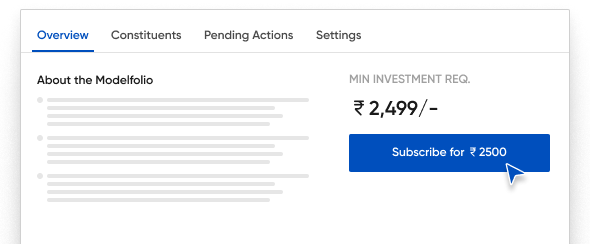
Invest in the portfolio & follow updates. Set up SIP for disciplined, long-term wealth creation.
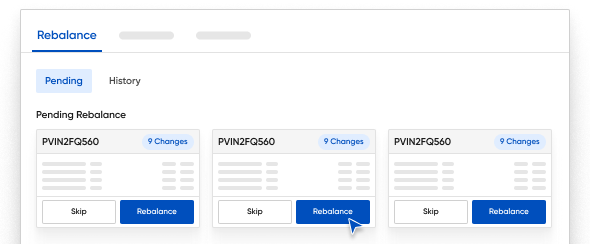
The Research Advisory services are provided by Kushal Lakhani, a SEBI Registered Research Analyst, offering equity research and market insights in accordance with
My investment principle is based on a disciplined, research-driven approach that combines fundamental analysis of businesses with technical analysis of mar
Risk management is an integral part of my research process. It includes position sizing, diversification, technical risk levels, and continuous review of fundamental assumptions. T